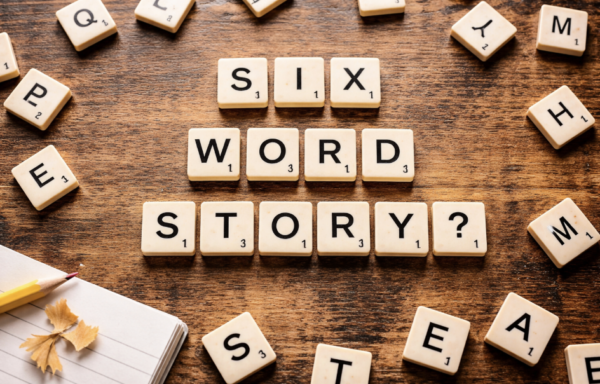
If you have ever written a six word story, you have probably hit the same question sooner or later: what actually counts as a word?
It seems simple until you start counting. Does don’t count as one word or two? What about mother-in-law? Can a number count? Does a title count? And can punctuation change the total?
This guide gives you a clear, practical answer. It also sets out a sensible house style you can use for writing, teaching, or entering a six word story contest.
Table of Contents
- Quick answer
- Six Word Wonder house rule
- Do contractions count as one word?
- Do hyphenated words count as one word?
- Do numbers count as words?
- Do names count as one word?
- Do titles count?
- Does punctuation count?
- What about symbols, emoji, and invented words?
- Examples of six word word counts
- Best practical advice
- Further reading
- FAQ
Quick answer
In a six word story, a word usually counts if it appears as a separate written word. Contractions normally count as one word. Numbers usually count as one word. Names count according to how many separate words they contain. Punctuation does not count. Titles usually do not count unless a competition or publication says otherwise.
If you want to skip the debate and just write powerful tiny stories, explore some six word story examples, browse famous six word stories, or try the microfiction prompts generator.
Six Word Wonder’s house rule
If you want a simple and consistent rule for your own writing, classroom, or contest, this works well:
- Count each separate written word as one word.
- Contractions count as one word.
- Common hyphenated compounds count as one word.
- Numbers count as one word.
- Names count by the number of separate words they contain.
- Punctuation does not count as a word.
- No titles allowed
- Symbols and emoji should be experimented with.
That gives you a rule set that is simple, fair, and easy for readers to understand at a glance.
Do contractions count as one word?
Yes. In normal usage, contractions such as don’t, can’t, I’m, you’re, and they’ve are counted as one word.
Example:
I’m home. You’ve already moved on.
That is six words: I’m / home / You’ve / already / moved / on.
Contractions are useful in six word writing because they save space without sounding forced. If you want to see how compression works in practice, the page on 6 word fiction is a good companion read.
Do hyphenated words count as one word?
Usually, yes. Common hyphenated compounds such as well-being, never-ending, or mother-in-law are normally treated as one unit for this kind of writing.
That said, hyphenation can get messy. English style guides do not always agree on when a term should be hyphenated, closed up, or left open. That is why the safest option is to use hyphenated words sparingly unless your own rules make the standard clear.
If a story only works because of a debatable hyphen, it may be worth rewriting it. Although I would avoid making perfection the enemy of the good.
Do numbers count as words?
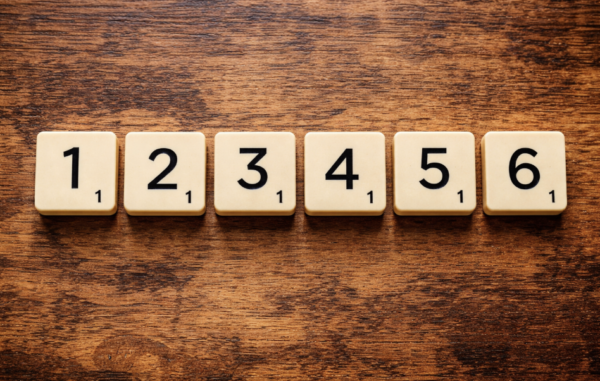
Yes. A numeral usually counts as one word, just as the spelled-out version would.
So 7 counts as one word, and seven also counts as one word.
Two rabbits arrived. Sixty-Eight rabbits left.
That is six words: Two / rabbits / arrived / Sixty-Eight / rabbits / left.
Generally, longer numbers still count as one word too. I’d think of them as hyphenated: One-Hundred-And-Twenty-Three is one word. As is 123.
Do names count as one word?
A single name counts as one word. So Mary, London, and Christmas are one word each.
But a multi-part name counts as multiple words. Mary Shelley is two words. Los Angeles is two words (although LA is one). New York is two words.
This matters more than people think. Proper nouns can quietly eat up your word count, especially in memoir-style pieces. For more inspiration in that direction, take a look at random 6 word memoirs.
Do titles count?
Under the Six Word Wonder rules, there are no titles. The story should speak for itself.
Does punctuation count?
No. Punctuation does not count as a word.
Commas, full stops, apostrophes, quotation marks, question marks, ellipses, and exclamation marks all affect the rhythm and meaning of the story, but they do not increase the word total.
*Dives underwater* Suffocating… Saved by mermaid!
That is still six words: Dives / underwater / Suffocating / Saved / by / mermaid.
Punctuation matters because six word stories are so few. One comma or full stop can change the pace, tone, and implied meaning.
If you want to see that kind of tiny shift in action, browse the Hemingway six word stories and compare how slight wording differences affect impact.
What about symbols, emoji, and invented words?
One of the joys of six word writing is how much room there is to experiment. Symbols, emoji, sound effects, and invented words can all bring energy, personality, and surprise to such a tiny space.
An invented word might add humour or voice. A symbol might create a visual jolt. Even an emoji, used sparingly, can shift the mood in an instant. That playful freedom is part of what makes six word stories so much fun to write.
The sweet spot is experimentation that still feels easy for the reader to follow. The most effective six word stories often let the reader count the words quickly, then enjoy the meaning, twist, or emotion underneath.
So yes, experiment. Be playful. Be inventive. Just make sure the story still lands cleanly.
Examples of six word word counts
Here are a few quick examples to show how the counting works.
| Story | Count | Why |
|---|---|---|
| I’m late. The funeral already ended. | 6 | I’m counts as one word. |
| Well-dressed liar fooled everyone except grandma. | 6 | Well-dressed counts as one word. |
| 7 candles burned. Nobody remembered my name. | 6 | 7 counts as one word. |
| Los Angeles glittered. We slept outside. | 6 | Los Angeles is two words. |
| He whispered, “Run.” I married him. | 6 | Punctuation does not affect the count. |
If you want more inspiration after this, dip into famous six word stories, read more six word story examples, or generate strange combinations with the Six Word Wonder generator.
Best practical advice
The best approach is to enjoy the freedom of the form while keeping the story easy for the reader to grasp.
Part of the pleasure of six word writing is testing how much meaning, emotion, and surprise you can fit into such a tiny space. You can be playful, inventive, and bold with your choices.
The most effective six word stories usually feel effortless to read. A reader can count the words almost instantly, then move straight into the twist, the joke, the sadness, the mystery, or the shock.
When that balance is right, the form really sings.
If you want to get better at that skill, you might also like teaching six word stories for exercise ideas, or Doug Weller’s books page for the wider Six Word Wonder world.
Further reading
If you want to go deeper into words, punctuation, and miniature storytelling, these are useful places to explore:
- Merriam-Webster definition of “word”
- Purdue OWL guide to hyphen use
- Six-Word Memoirs
- Reedsy creative writing prompts
Those links are useful for definitions, writing conventions, and wider six-word inspiration. Then come back and write something sharper.
Frequently Asked Questions
Does “don’t” count as one word in a six word story?
Yes. Contractions such as don’t, can’t, and I’m normally count as one word.
Does a hyphenated word count as one word?
Usually yes, especially if it is a familiar compound. But if the hyphen feels debatable, it is often better to rewrite the story more clearly.
Do numbers count as words in six word stories?
Yes. A numeral such as 7 usually counts as one word, just like seven.
Do titles count in a six word story?
Normally, no. But under Six Word Wonder’s house rules, there are no titles.
Does punctuation count as a word?
No. Punctuation changes tone and rhythm, but it does not add to the word count.
What is the safest way to count words in a six word story?
Count each separate written word as one word, treat contractions as one word, ignore punctuation, and avoid relying on technical loopholes.